

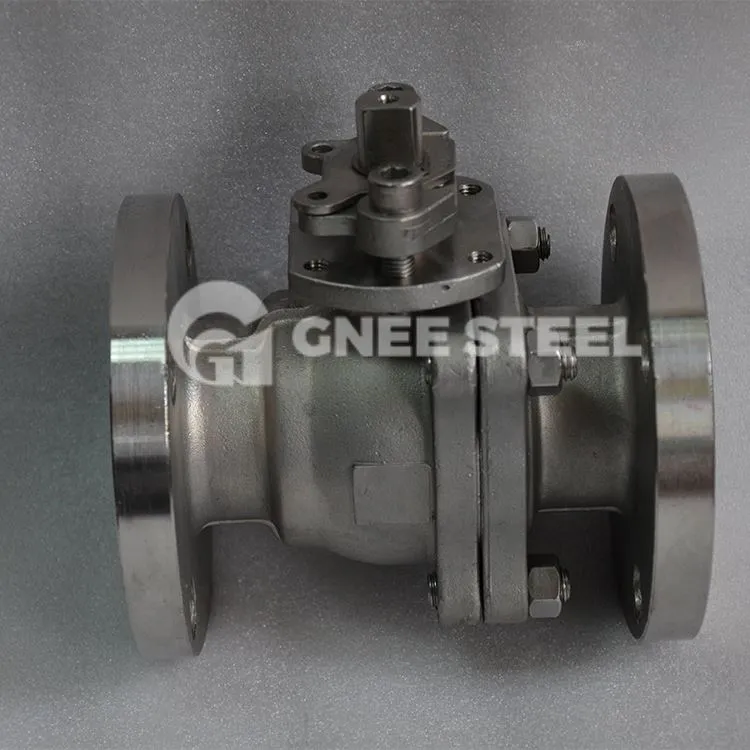


The ball of the threaded floating ball valve is capable of floating. Under the pressure of the medium, the ball can produce a certain displacement and press against the sealing surface of the outlet to ensure the sealing of the outlet. The floating ball valve has a simple structure and good sealing performance. However, the load of the working medium borne by the ball is all transmitted to the outlet sealing ring. Therefore, it is necessary to consider whether the sealing ring material can withstand the working load of the ball medium. When subjected to high-pressure shocks, the ball may deviate. This structure is generally used for medium and low pressure ball valves.
Size Range: from 1/4" –12"
Pressure Rangeansi:150# Through ANSI 2500# pressure class, 800 WOG – 6000 WOG
Material Grades: Cast and Forged offering, A216-WCB, A105N, A351-CF8M, A182-F316 SS, A352-LCC, A350LF2, A350-LF6, F51 Duplex, Alloy 20, Hasteloy C, Other special grade materials
Trim Material: S316 Stainless Steel, Other exotic alloys
Standard Seat Material: RTFE, TFM 1600, Other materials available
Steam rating: 125 PSI WSP
Body: ASTM A351 Gr.CF8M, CF8, A105, WCB
Working Pressure: 1000 PSI
Temperature Range: -20 degree F (-29 degree )- 450 degree F(232 degree )
Test Standard: API598
Threaded Type: ANSI B 1.20.1 (NPT), DIN 259/DIN 2999, IS0 228-1


In order to ensure the sealing and reliability of the floating ball valve during operation, there should be a sufficiently high sealing pressure ratio on the contact surface between the ball and the valve seat, but it should not exceed the allowable pressure ratio of the valve seat material. The seat should fit tightly in the groove, otherwise even if the valve seat has a good sealing performance on the ball, the medium will leak along the end surface of the groove. The ball should have the correct geometry and low surface roughness value. The ball is usually manufactured according to h6 or h7 precision, and its surface roughness value is not greater than R.0.4. In order to improve the surface hardness and wear resistance of the ball, the surface of the ball should be hardened. The sealing valve seat can be made of plastic, and it should be ensured to fit tightly and not damage the sealing surface of the ball. At the same time, the material should have sufficient strength to withstand high sealing pressure ratios. Polytetrafluoroethylene is one of the most commonly used materials for making valve seats.
लोकप्रिय टैग: